Home Developmental Activities for Children | Dubai Parent Guide
1. Introduction: Reframing the “Wait”
Reaching out for professional support for your child is a massive, courage-filled step. However, finding yourself on a waitlist for specialized services in Dubai can feel overwhelming and disheartening. You might watch the calendar days slip by and worry that your child is falling further behind their peers.
At Small Steps Big Dreams, we want to help you reframe this waiting period completely. Therapy provides the clinical roadmap, but your home is where daily, transformative progress actually happens. You do not need a clinical setting or specialized equipment to build your child’s foundational skills.
Disclaimer: The home developmental activities outlined in this guide are designed to support skill-building and play. They serve as a powerful home supplement, but they do not replace a formal professional evaluation or an individualized intervention plan from a licensed specialist.
2. Speech & Language Boosters: Everyday Communication
Communication grows best during functional, real-world interactions rather than forced drills at a desk. In many Dubai households, children are exposed to multiple languages across school, home, and daytime caregivers. You can turn your everyday routines into language-rich environments without adding extra stress to your busy schedule.
The “Sportscaster” Method
Imagine you are a live sports commentator narrating your day out loud to your child. Describe what you are seeing, touching, and doing using simple, clear, and animated language. This method builds your child’s passive vocabulary without placing any pressure on them to respond.
- During Grocery Shopping: Point to items in the supermarket aisle and say, “Big red apple! We are putting three crisp apples into the green bag.”
- During Meal Prep: Describe your kitchen actions step-by-step: “I am slicing the cold cucumber. Chop, chop, chop goes the knife!”
- Why It Works: It continuously floods your child’s brain with functional language associations tied to real objects in their immediate environment.
Created Opportunities for “Manding”
“Manding” is the clinical term for requesting a desired item, action, or break. When parents anticipate a child’s every need instantly, the child loses the natural motivation to communicate. By intentionally creating mild, playful obstacles, you encourage your child to express their desires.
- The Out-of-Reach Shelf: Place your child’s favorite toy on a clear shelf that is visible but just beyond their physical reach.
- The Missing Piece: Hand your child an empty snack bowl or a bubble wand without the liquid container.
- The Pause: Wait 5 to 10 seconds before fulfilling a request, giving your child space to point, make a sound, or attempt a word.
Integrating Daytime Caregivers & Nannies
If your child spends their daytime hours with a nanny or caregiver while you work, consistency is critical. In multilingual Dubai homes, caregivers often feel unsure about which language to use or how to prompt communication.
- Establish Clear Prompts: Give your caregiver 2 or 3 simple phrases to focus on each week, such as “More water, please” or “Open the door.”
- Encourage Native Language Interaction: Advise your caregiver to speak their most fluent, natural language clearly rather than using broken English.
- Limit Passive Screen Time: Ask your caregiver to replace background television with interactive narration during lunch, bath time, and walks around your local community.
3. Motor Skill Boosters: The “Apartment-Friendly” Gym
Living in a high-rise apartment in areas like Dubai Marina or Downtown Dubai often means indoor spaces must double as physical play zones. You do not need a large backyard or expensive gymnastics tools to build core strength and fine motor precision.
Fine Motor Precision
Fine motor skills involve the small muscles in the fingers and wrists that children need for holding pencils, using scissors, and dressing themselves.
- Kitchen Tongs & Pasta: Give your child a pair of plastic kitchen tongs and ask them to transfer dry penne pasta between two plastic bowls. This action strengthens the exact grip muscles needed for writing.
- Peeled Stickers: Place colorful stickers on a tray or tile and have your child peel them off using their thumb and index finger. This builds pincer grasp precision and hand-eye coordination.
- Balcony Water Painting: On your apartment balcony, give your child a bowl of tap water and a broad house-painting brush. Let them “paint” water designs across the balcony floor tiles or glass balustrade.
High-Rise Gross Motor Games
Gross motor skills rely on large muscle groups responsible for balance, posture, and coordination. These indoor games build core stability and proprioception (body awareness) without disturbing your downstairs neighbors.
- Couch-Cushion Obstacle Course: Arrange sofa cushions, rolled towels, and low footstools across your living room rug. Challenge your child to step over, crawl under, and balance across the uneven surfaces.
- Animal Walks Down the Hallway: Turn your apartment hallway into an animal safari before bedtime or bath time routines.
- Bear Crawls: Hands and feet flat on the floor with hips high in the air to build upper body strength.
- Frog Hops: Squatting low and leaping forward to build leg power and joint awareness.
- Crab Walks: Sitting down, lifting hips, and walking on hands and feet backward to activate core stability.
- Park Outings: During cooler outdoor hours, visit local spots like Barsha Pond Park or Safa Park. Walking on uneven grass and navigating playground ladders builds essential balance control.
4. Social-Emotional Growth: “People Games”
Social-emotional skills begin with Joint Attention, the ability to share an experience and focus on the same object or event together with another person. “People Games” require no toys, batteries, or screens, forcing your child to focus entirely on human interaction and facial expressions.
“Ready, Set… GO!”
This classic game teaches turn-taking, anticipation, and communicative eye contact.
- Hold a ball, a toy car, or a bubble wand near your eyes so your child is naturally looking at your face.
- Say in an animated voice: “Ready… Set…” and then pause completely.
- Hold the silence for 3 to 5 seconds, watching for your child to make eye contact, smile, or make a sound.
- The second they make eye contact or vocalize, shout “GO!” and release the toy or blow the bubbles.
The Mirror Game
Understanding facial expressions is the foundation of empathy and emotional recognition.
- Sit with your child in front of a large bathroom or wardrobe mirror.
- Make exaggerated facial expressions while naming the emotion clearly: “Look! Happy face!” or “Oh no! Surprised face!”
- Gently encourage your child to copy your expressions, helping them connect physical facial movements with emotional concepts.
Social Role-Playing
Use stuffed animals or dolls to act out common social interactions that your child encounters daily. Practice scenarios like sharing a toy at the park, saying “hello” to a teacher, or waiting patiently for a snack. Role-playing reduces anxiety by giving your child a predictable script for real-world social settings.
5. Tracking Progress: The “Small Wins” Log
When you are waiting for professional support, it is easy to feel like your child is stuck. However, real developmental progress happens in tiny, incremental steps that are easy to overlook if you are not tracking them.
Small Steps Big Dreams recommends keeping a simple weekly log on your phone or fridge. Documenting these small breakthroughs maintains your parental momentum and provides invaluable baseline data for your future therapy team.
Weekly “Small Wins” Template
| Date | Targeted Skill Area | Activity or Trigger | What My Child Accomplished Today |
| Oct 12 | Speech / Manding | Out-of-reach juice box on counter | Pointed and vocalized “a-puh” instead of crying. |
| Oct 14 | Fine Motor | Peeled stickers on balcony glass | Peeled 5 stickers independently using pincer grip. |
| Oct 16 | Joint Attention | “Ready, Set, GO!” ball game | Maintained eye contact for 4 seconds before I threw the ball. |
| Oct 18 | Gross Motor | Hallway Bear Crawl | Completed 3 full hallway crawls without dropping knees. |
6. When the “Wait” Isn’t an Option: Red Flags
CRITICAL DEVELOPMENTAL CALLOUT
While home activities are incredibly beneficial, certain symptoms require immediate medical evaluation by a licensed Developmental Pediatrician. Do not adopt a “wait and see” approach if you observe any of the following red flags:
- Sudden Skill Regression: Any loss of previously acquired speech, gestures, or social engagement skills.
- Lack of Social Smile or Eye Contact: Complete absence of warm, joyful responses or eye contact by 12 months of age.
- No Communication Gestures: Absence of pointing, waving, or showing items to caregivers by 14 to 16 months.
- Significant Motor Regression: Sudden inability to bear weight on legs, frequent falling, or severe loss of hand coordination.
- Safety Unawareness: Persistent lack of self-preservation awareness, such as repeatedly running toward busy roads or jumping from dangerous heights without hesitation.
7. FAQ Section
Will simple home activities really make a measurable difference?
Yes, absolutely. Daily consistency is the single greatest driver of skill acquisition and neural development in young children. Engaging your child in targeted 5-to-10-minute routines three times a day builds far more sustainable pathways than a single weekly session alone.
What should I do if my child completely refuses to participate?
Never force an activity, as frustration shuts down the brain’s learning centers. Use the “Follow the Child’s Lead” approach by joining whatever activity your child is currently interested in. If they are banging pots on the kitchen floor, join in and turn it into a turn-taking game of copycat rhythm.
Should we push to secure more therapy hours as soon as a slot opens?
In developmental support, quality of engagement always beats sheer quantity of hours. It is far more effective to start with a manageable schedule where you can actively learn the therapist’s carryover strategies than to overwhelm your child with exhausting daily sessions.
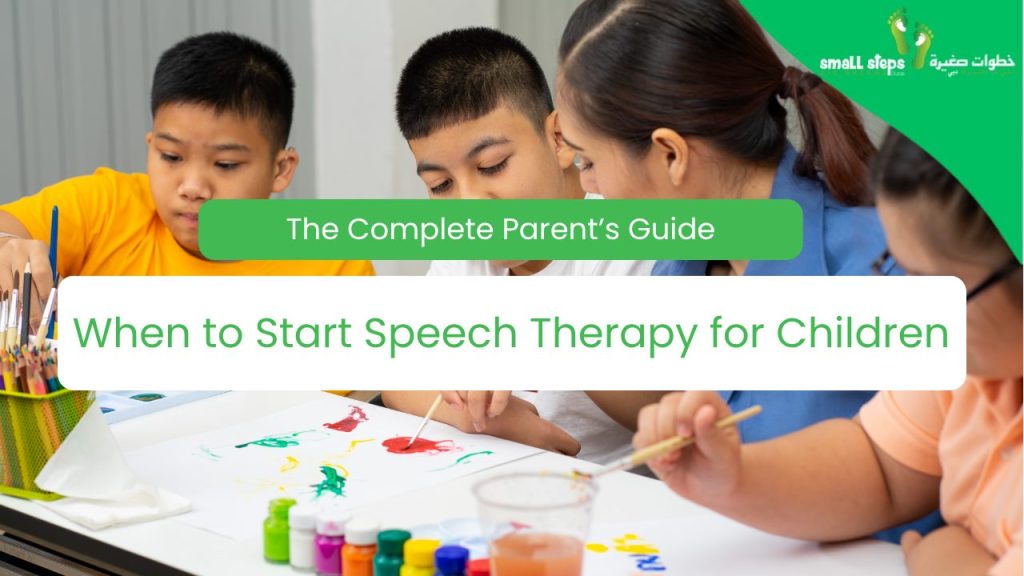
If your child is experiencing difficulties with communication or language development, our guide on when to start speech therapy for children in Dubai can help parents understand when professional support may be appropriate.
Conclusion: Taking Control of the Journey
Waiting for a formal therapy slot does not mean your child’s progress is on hold. By transforming your daily Dubai apartment routines into intentional learning moments, you become the active driver of your child’s growth.
At Small Steps Big Dreams, we view parents as the most vital members of a child’s developmental team. Every time you narrate a trip to the supermarket, build a cushion obstacle course, or pause during a game of “Ready, Set, GO!”, you are laying the physical and cognitive foundations for your child’s future success.
Our Services
Recent Posts
- Speech Delay or Something Else? Understanding Communication Disorders in Young Kids
- Home Developmental Activities for Children | Dubai Parent Guide
- Parent Stories: Thriving in an Inclusive Classroom in Dubai
- (Guide) Occupational Therapy for Developmental Delay
- Speech Therapy for Bilingual Children: Unique Benefits and Approaches
- When to Start Speech Therapy for Children | Dubai Parent Guide
- Guide to School IEPs in Dubai | Understanding Individualised Education Plans
- Global Developmental Delay vs Autism | Dubai Parent Guide