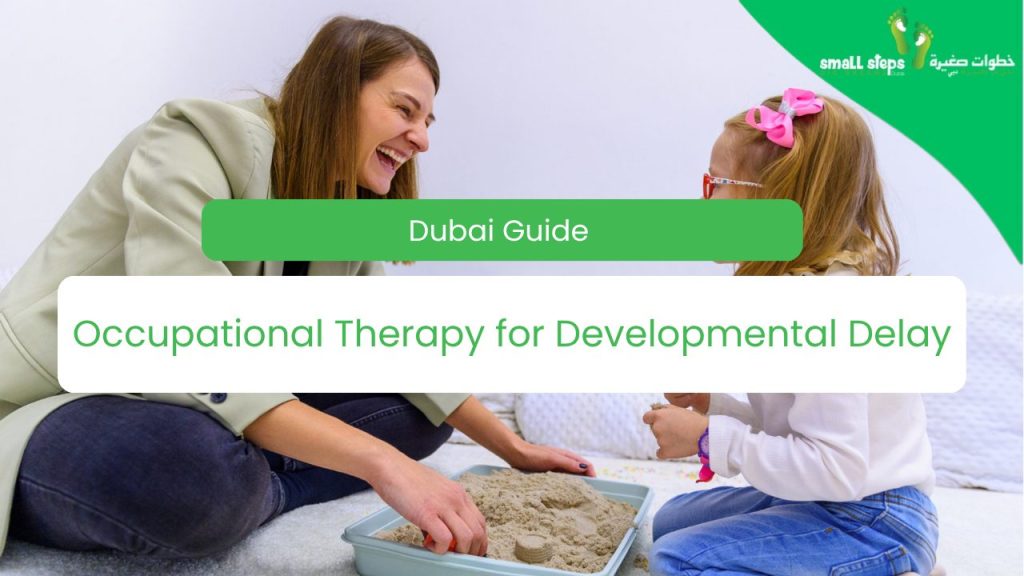
Occupational Therapy for Developmental Delay | Dubai Guide
1. Introduction: The “Job” of Being a Child
When parents first hear the term occupational therapy, they often think about careers or the workplace. It is understandable to wonder why a young child would need a therapy associated with “occupations.”
In paediatric occupational therapy, however, a child’s “occupations” are simply the everyday activities that are important for their development and participation. These include playing, eating, dressing, drawing, using cutlery, joining classroom activities, and developing independence in daily routines.
For some children with developmental delays, these everyday tasks can be more challenging. They may find it difficult to manage buttons or zips, hold a pencil, tolerate certain clothing textures, sit comfortably during group activities, or participate in play with their peers.
Occupational therapy helps children develop the skills they need to participate more independently and confidently in these everyday activities. Rather than focusing on what a child cannot do, occupational therapists identify their strengths, understand the areas where support is needed, and work collaboratively with families to build practical skills through meaningful play.
At Small Steps Big Dreams, our occupational therapists support children and families across Dubai by creating individualised therapy programmes that help children participate more successfully at home, in nursery, at school, and within their wider community.
2. What Exactly is Paediatric Occupational Therapy?
Paediatric occupational therapy (OT) supports children to develop the skills they need for everyday life. These skills include fine motor development, self-care, sensory processing, play, attention, and participation in home and school routines.
The goal of occupational therapy is not simply to practise isolated skills. It is to help children become more independent and confident in the activities that are meaningful to them and their families.
At Small Steps Big Dreams, every occupational therapy programme begins with a comprehensive assessment. Our occupational therapists use clinical observation, play-based assessment, parent interviews, and, where appropriate, standardised assessment tools to understand each child’s strengths, challenges, and participation in everyday activities.
This assessment helps us understand questions such as:
- Can your child use both hands together effectively?
- How do they manage dressing and feeding?
- Are sensory preferences affecting participation?
- How do they engage during play?
- What skills will support success at nursery or school?
Following assessment, therapy goals are developed collaboratively with families and are tailored to each child’s individual needs.
Because children spend most of their time at home and in school, we also work closely with parents, caregivers, and educators to help strategies carry over into everyday routines.
3. Key Skills Addressed During Occupational Therapy
Every child has a unique developmental profile. Occupational therapy programmes are individualised and may focus on one or more areas depending on a child’s strengths and needs.
Fine Motor Skills
Fine motor skills involve the small muscles of the hands and fingers that support everyday tasks and early learning.
Occupational therapy may help children develop skills such as:
- Finger strength and hand control for manipulating small objects, using scissors, turning book pages, and building with blocks.
- Pencil grasp and pre-writing skills to support drawing, colouring, and early handwriting.
- Self-care skills such as managing buttons, zips, cutlery, and opening lunch containers.
- Bilateral coordination, helping both hands work together during activities such as cutting with scissors or threading beads.
Developing these skills supports greater independence both at home and in the classroom.
Gross Motor Skills and Core Stability
Gross motor skills involve the larger muscles of the body and provide the foundation for many everyday activities.
Occupational therapists may work on:
- Core strength and postural control to help children sit comfortably during classroom activities or mealtimes.
- Balance and coordination for running, climbing, jumping, and navigating playgrounds safely.
- Motor planning, which helps children organise and carry out unfamiliar movements and physical tasks.
Good postural stability also supports the development of fine motor skills, allowing children to use their hands more efficiently during play and learning.
Sensory Processing
Sensory processing refers to how the brain receives, organises, and responds to information from the senses, including touch, movement, sound, sight, taste, smell, and body awareness.
Children process sensory information differently. Some may actively seek sensory experiences, while others may be more sensitive to certain sounds, textures, movements, or environments.
Occupational therapy can help children who experience sensory processing differences by supporting participation in everyday activities.
This may include helping children:
- Become more comfortable with different clothing textures or food consistencies.
- Develop strategies for busy or noisy environments.
- Improve attention and participation during classroom activities.
- Build self-regulation skills that support everyday routines.
The aim is not to remove sensory preferences, but to help children participate more comfortably and confidently in daily life.
4. A Day in the Life: Inside a Sensory Space
Walking into the sensory space at Small Steps Big Dreams looks very different from walking into a traditional medical clinic.
Instead of examination tables, you will see climbing equipment, swings, balance beams, crash mats, obstacle courses, tactile play materials, and creative play stations. Although it may look like a large indoor playground, every activity has a therapeutic purpose.
For example, a child climbing through an obstacle course may be developing:
- Core strength
- Balance and coordination
- Motor planning
- Body awareness
- Confidence when trying new movements
Another child searching for small toys hidden in rice, sand, or sensory materials may be working on:
- Fine motor control
- Hand strength
- Tactile tolerance
- Finger coordination
- Attention and concentration
Throughout the session, activities are adapted to match each child’s individual goals while remaining engaging and enjoyable.
At Small Steps Big Dreams, we believe children learn best through play. By embedding therapeutic goals within motivating activities, occupational therapy becomes a positive experience that supports meaningful participation in everyday life rather than simply practising isolated skills.
5. OT vs. PT: Understanding the Difference
Many parents are unsure about the difference between Occupational Therapy (OT) and Physical Therapy (PT). While both professions support children’s development, they focus on different aspects of movement and participation.
| Occupational Therapy (OT) | Physical Therapy (PT) |
|---|---|
| Supports participation in everyday activities such as dressing, feeding, handwriting, play, and self-care. | Supports movement, mobility, strength, balance, and gross motor development. |
| Focuses on fine motor skills, sensory processing, visual motor skills, and independence. | Focuses on walking, running, jumping, climbing, posture, and physical mobility. |
| Helps children participate successfully in home, nursery, and classroom activities. | Helps children develop the physical skills needed to move confidently and safely. |
Think of it this way…
Physical Therapy helps children develop the movement skills they need to explore and move through their environment.
Occupational Therapy helps children use those movement skills to participate in everyday activities such as dressing, writing, eating, playing, and learning.
Many children benefit from one therapy, while others may benefit from both, depending on their individual needs.
6. A Child’s Journey: Building Everyday Independence
Every child’s therapy journey is different, and progress happens at different rates depending on their strengths, goals, and opportunities to practise new skills.
Consider the experience of “Karan” (name changed to protect privacy).
When Karan first attended Small Steps Big Dreams, he found several everyday activities challenging. He had difficulty using a spoon independently, became upset during handwashing because he disliked the sensation of running water, and found it difficult to remain comfortably seated during nursery group activities.
Following an occupational therapy assessment, his therapy programme focused on developing fine motor skills, improving participation in self-care routines, and gradually supporting his sensory processing through play-based activities.
Sessions included activities such as climbing obstacle courses to build core strength, water play to increase confidence with different sensory experiences, and games designed to improve hand strength and coordination.
At the same time, Karan’s family were given practical strategies to use at home so new skills could be practised during everyday routines.
Over time, Karan became more confident dressing himself, using cutlery during meals, participating in nursery activities, and managing everyday routines with greater independence.
Every child’s journey is unique, but occupational therapy aims to build meaningful skills that improve participation in everyday life, both at home and at school.
7. The Home Connection: Everyday Activities That Build Skills
Children make the greatest progress when therapy strategies continue beyond the clinic.
Many everyday activities at home provide excellent opportunities to develop motor skills, coordination, and independence through play.
Try These Simple Activities at Home
Kitchen Helpers
Using child-safe tongs to move pasta, fruit, or small objects between bowls helps develop hand strength, finger coordination, and bilateral hand use.
Animal Walks
Encourage your child to move around the house pretending to be different animals.
Examples include:
- Bear walks
- Crab walks
- Frog jumps
- Penguin waddles
These activities support core strength, balance, coordination, and body awareness.
Dressing Practice
Allow your child extra time to practise buttons, zips, shoes, or putting on a jacket before stepping in to help.
Small opportunities to practise independence every day often build confidence over time.
Sensory Play
Activities such as drawing in shaving foam, playing with kinetic sand, scooping rice, water play, finger painting, or exploring play dough can support fine motor development while allowing children to explore different textures through enjoyable play.
At Small Steps Big Dreams, our occupational therapists work with families to develop practical home strategies that fit naturally into daily routines and complement therapy sessions.
You can also read : Early Signs of Developmental Delay: What Dubai Parents Should Look For
Frequently Asked Questions
How can occupational therapy support school readiness?
Occupational therapy helps children develop many of the skills used during everyday school routines.
Depending on a child’s needs, therapy may support:
- Sitting comfortably during classroom activities.
- Holding pencils and using classroom tools.
- Managing lunch boxes, bags, buttons, and zips.
- Following classroom routines.
- Participating in group activities.
- Developing greater independence during the school day.
The focus is always on helping children participate successfully in everyday school experiences rather than preparing for a specific school assessment.
How often does my child need occupational therapy?
There is no single answer.
Following an assessment, your occupational therapist will recommend a therapy schedule based on your child’s individual strengths, goals, and developmental needs.
Many children attend one or two sessions each week alongside regular opportunities to practise new skills at home and, where appropriate, in school.
Can occupational therapy be provided alongside other therapies?
Yes. Occupational therapists often work as part of a multidisciplinary team alongside speech and language therapists, psychologists, physiotherapists, developmental paediatricians, teachers, and families.
Working collaboratively helps ensure therapy goals are consistent across home, school, and other settings, providing children with coordinated support.
My child doesn’t like messy play. Does that mean they need occupational therapy?
Not necessarily.
Many children have individual preferences for certain textures or activities.
However, if sensory preferences are making it difficult for your child to participate in everyday activities, such as eating, dressing, playing, or attending nursery, it may be helpful to discuss your concerns with an occupational therapist who can assess whether additional support would be beneficial.
Conclusion: Turning Steps into Milestones
A developmental delay can make everyday tasks feel like overwhelming hurdles for your family. However, with the right data-driven support plan, those hurdles become manageable milestones. Occupational therapy replaces the stress of guesswork with a clear, predictable pathway toward functional daily autonomy.
Our Services
Recent Posts
- Speech Delay or Something Else? Understanding Communication Disorders in Young Kids
- Home Developmental Activities for Children | Dubai Parent Guide
- Parent Stories: Thriving in an Inclusive Classroom in Dubai
- (Guide) Occupational Therapy for Developmental Delay
- Speech Therapy for Bilingual Children: Unique Benefits and Approaches
- When to Start Speech Therapy for Children | Dubai Parent Guide
- Guide to School IEPs in Dubai | Understanding Individualised Education Plans
- Global Developmental Delay vs Autism | Dubai Parent Guide