Understanding the Value of Inclusive Classrooms in Dubai Schools
Introduction: More Than a Support Model
Inclusive education has become an increasingly important part of school life across Dubai. Most parents understand that inclusion helps students who require additional support to access learning and participate in school. However, fewer parents realise that inclusive classrooms can also create meaningful benefits for all children.
As families explore school options, they often consider curriculum, academic performance, facilities, extracurricular activities, and school culture. Increasingly, they are also asking questions about inclusion and how schools support students with diverse learning needs.
Some parents wonder whether inclusive classrooms affect academic standards or whether teachers can effectively support students with a wide range of needs. In reality, well-implemented inclusive education is not about lowering expectations. It is about creating learning environments that are flexible, accessible, and responsive to different learners.
Research suggests that inclusive educational environments can support social development, communication skills, collaboration, and a stronger sense of belonging for many students. When schools create opportunities for children to learn alongside peers with different strengths, experiences, and learning profiles, everyone can benefit.
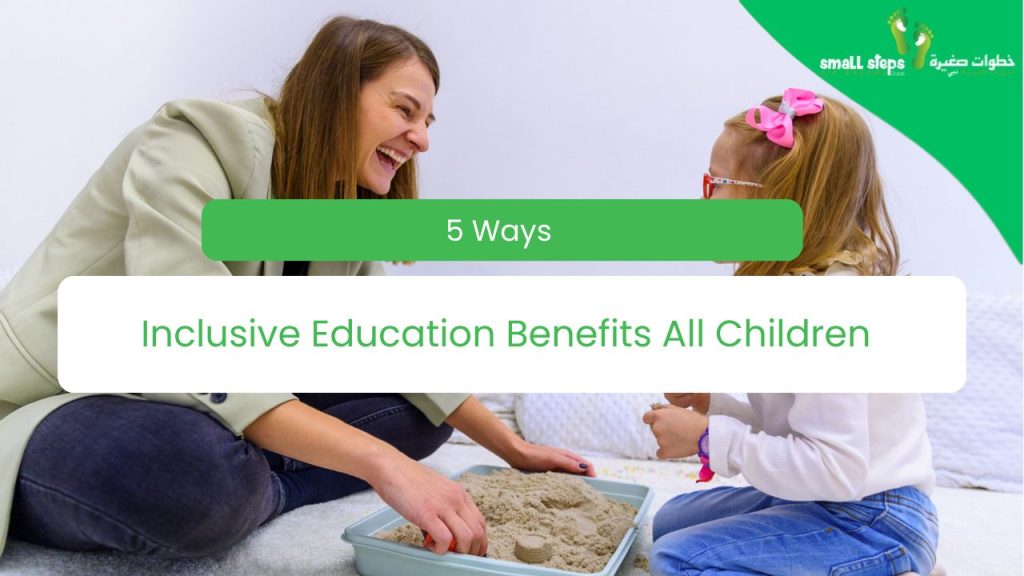
Here are five ways inclusive education can positively impact all children—not just those receiving additional support.
Universal Design for Learning (UDL): Supporting Different Ways of Learning
One of the key principles behind inclusive education is an approach called Universal Design for Learning (UDL). UDL encourages teachers to plan lessons that recognise students learn in different ways and may need different opportunities to engage with learning.
In practice, this might mean presenting information using a combination of spoken instruction, visual supports, hands-on activities, discussion, and technology. Rather than creating separate lessons for different students, teachers provide multiple pathways for students to access the same learning objectives.
This flexible approach benefits students who require additional support, while also helping many other learners engage more effectively with classroom learning.
Benefit 1: Flexible Teaching Supports Different Learning Styles
Children do not all learn in the same way.
Some children learn best through listening, others through visual supports, practical activities, discussion, repetition, movement, or independent exploration. Inclusive classrooms encourage teachers to use a range of teaching methods that can support different learning preferences within the same lesson.
This flexibility often benefits the entire class.
Strategies that are initially introduced to support students with additional needs may also help students who:
- Learn visually
- Benefit from structured routines
- Need additional processing time
- Are learning English as an additional language
- Prefer hands-on learning experiences
- Thrive with clear organisation and expectations
What This Might Look Like in the Classroom
During a science lesson, students may learn about ecosystems through teacher instruction, visual diagrams, small-group discussion, practical activities, and independent research. While all students are working towards the same learning objectives, they are able to engage with the content through different pathways.
This approach creates more opportunities for participation and helps students build confidence in their own learning styles.
Benefit 2: Learning Alongside Diverse Peers Builds Communication Skills
Schools are about much more than academic learning. They are also places where children develop communication, cooperation, and social skills that will serve them throughout their lives.
Inclusive classrooms provide regular opportunities for children to interact with peers who may think, communicate, or learn differently from themselves.
Through group projects, classroom discussions, play, and everyday interactions, children learn to:
- Listen to different perspectives
- Communicate clearly
- Work collaboratively
- Solve problems together
- Adapt their communication style when needed
These experiences help children understand that there is often more than one way to approach a task, express an idea, or solve a problem.
Why This Matters
As children grow, they will encounter people with different backgrounds, abilities, experiences, and perspectives. Learning to communicate effectively with a wide range of people is an important life skill that extends well beyond the classroom.
Benefit 3: Inclusive Classrooms Support Social and Emotional Development
Inclusive educational environments can provide valuable opportunities for children to develop social and emotional skills.
When children regularly interact with peers who have different strengths, interests, and learning profiles, they often develop a broader understanding of human diversity and individuality.
These experiences may support the development of:
- Empathy
- Perspective-taking
- Respect for differences
- Self-awareness
- Social confidence
- Relationship-building skills
Importantly, inclusion is not about teaching children to feel sorry for others. It is about helping children understand that every person has unique strengths, challenges, and experiences.
For many children, inclusive classrooms become places where they learn that differences are a normal part of everyday life and that everyone deserves opportunities to participate, contribute, and belong.
Benefit 4: Children Learn to Navigate a Diverse World
Dubai is one of the most culturally diverse cities in the world. Children attending school in Dubai often learn alongside classmates from a wide range of countries, cultures, languages, and backgrounds.
Inclusive education reflects this reality.
It encourages children to recognise and appreciate different perspectives while learning how to work effectively within diverse communities.
Through inclusive educational experiences, children develop skills that may support future success in education, employment, and community life, including:
- Adaptability
- Collaboration
- Respect for different viewpoints
- Cultural awareness
- Problem-solving
- Flexible thinking
These skills are increasingly important in a world where people are expected to work, learn, and communicate across a wide variety of settings and communities.
Benefit 5: A Stronger Sense of Belonging and Community
At its core, inclusion is about belonging.
Children are more likely to thrive when they feel accepted, respected, and connected to their school community. Inclusive schools work to create environments where all students have opportunities to participate meaningfully in learning, friendships, activities, and school life.
A strong culture of inclusion can contribute to:
- Positive peer relationships
- Greater social participation
- Stronger school communities
- Increased understanding and acceptance
- More collaborative relationships between families and schools
These benefits often extend beyond individual students and contribute to a school environment where diversity is viewed as a strength rather than a challenge.
You Can Also Read – How to Apply for Inclusion Support in Dubai Schools: Step-by-Step for Parents
The Role of Collaboration
Successful inclusion is supported by collaboration between educators, families, school leaders, and, where appropriate, external professionals.
At Small Steps Big Dreams, we work alongside families and schools across Dubai to support children’s participation, development, and educational success. Through collaboration and shared planning, we help create consistency between home, school, and therapeutic support services when needed.
Frequently Asked Questions
Will an inclusive classroom slow down advanced students?
Research generally suggests that the academic progress of students in inclusive classrooms is comparable to that of students in non-inclusive settings when appropriate educational supports are in place.
Inclusive education does not mean lowering academic expectations. Effective teachers continue to challenge students through differentiated instruction, extension activities, and flexible teaching approaches that support a range of abilities within the classroom.
How do teachers support students with different needs in one classroom?
Teachers use a variety of strategies to support diverse learners, including differentiated instruction, visual supports, classroom accommodations, flexible grouping, and collaborative planning with inclusion teams.
Many Dubai schools also have dedicated inclusion staff who work alongside classroom teachers to support student participation and learning.
How do children build friendships in inclusive classrooms?
Friendships often develop through shared interests, classroom activities, sports, creative projects, and everyday interactions.
Inclusive environments create opportunities for children to get to know one another as individuals rather than focusing on differences. Over time, these shared experiences can support meaningful and lasting friendships.
Conclusion: Learning Together
Inclusive education is not simply about providing support for a particular group of students. It is about creating learning environments where all children can participate, contribute, and feel valued.
When schools embrace inclusive practices, they often create more flexible, responsive, and engaging learning environments that support a wide range of learners.
For many families in Dubai, inclusion reflects a broader vision of education, one that values participation, respect, diversity, and belonging.
At Small Steps Big Dreams, we are proud to work alongside families and schools to support inclusive learning and meaningful participation for children across Dubai.
Take the Next Step
Download our Parent Guide to Inclusive Classrooms in Dubai or book an educational consultation to learn more about inclusive education pathways and school support options.
You can also explore our School Inclusion Resources to better understand how inclusive practices support children, families, and school communities across Dubai.
Our Services
Recent Posts
- Speech Delay or Something Else? Understanding Communication Disorders in Young Kids
- Home Developmental Activities for Children | Dubai Parent Guide
- Parent Stories: Thriving in an Inclusive Classroom in Dubai
- (Guide) Occupational Therapy for Developmental Delay
- Speech Therapy for Bilingual Children: Unique Benefits and Approaches
- When to Start Speech Therapy for Children | Dubai Parent Guide
- Guide to School IEPs in Dubai | Understanding Individualised Education Plans
- Global Developmental Delay vs Autism | Dubai Parent Guide